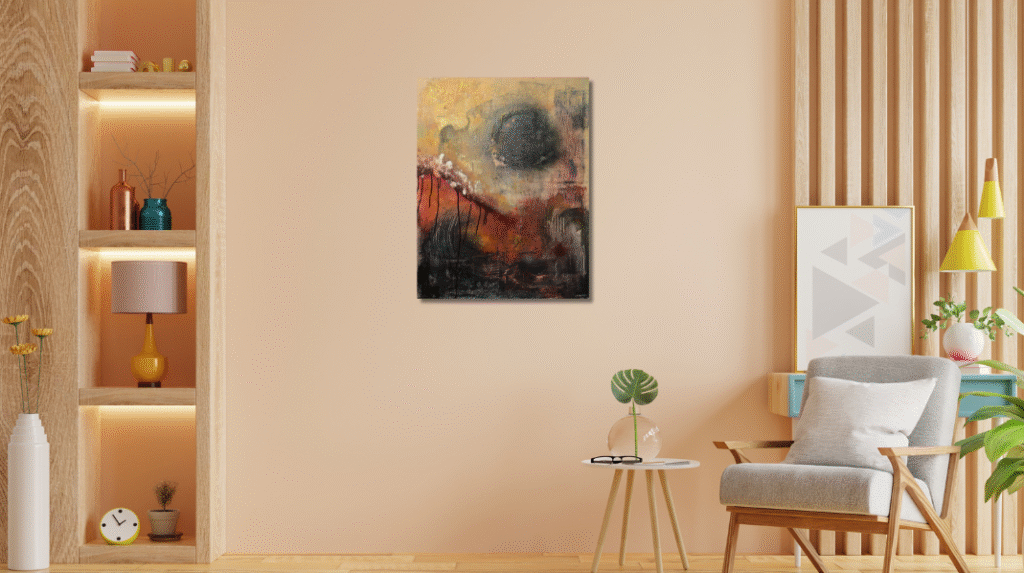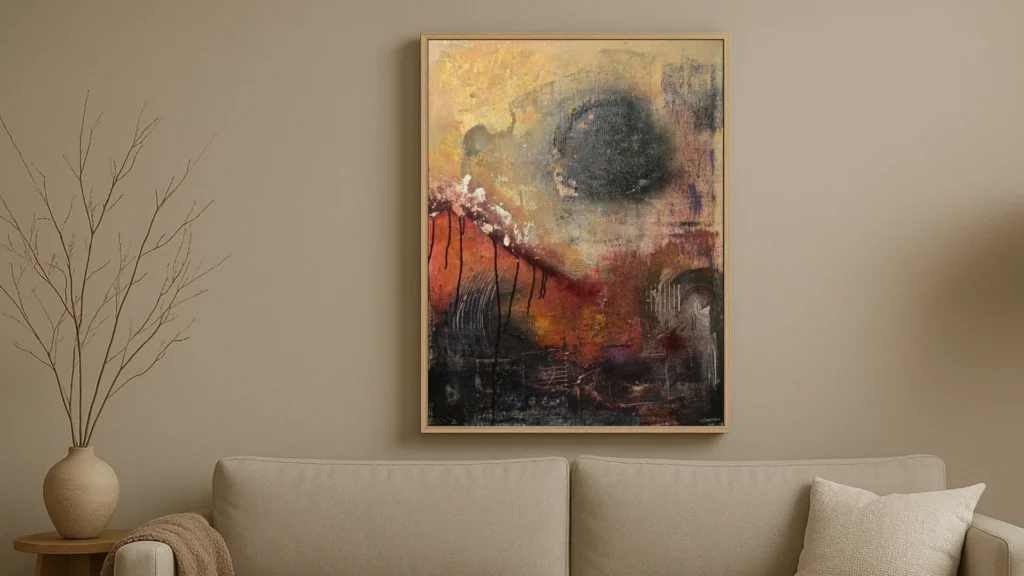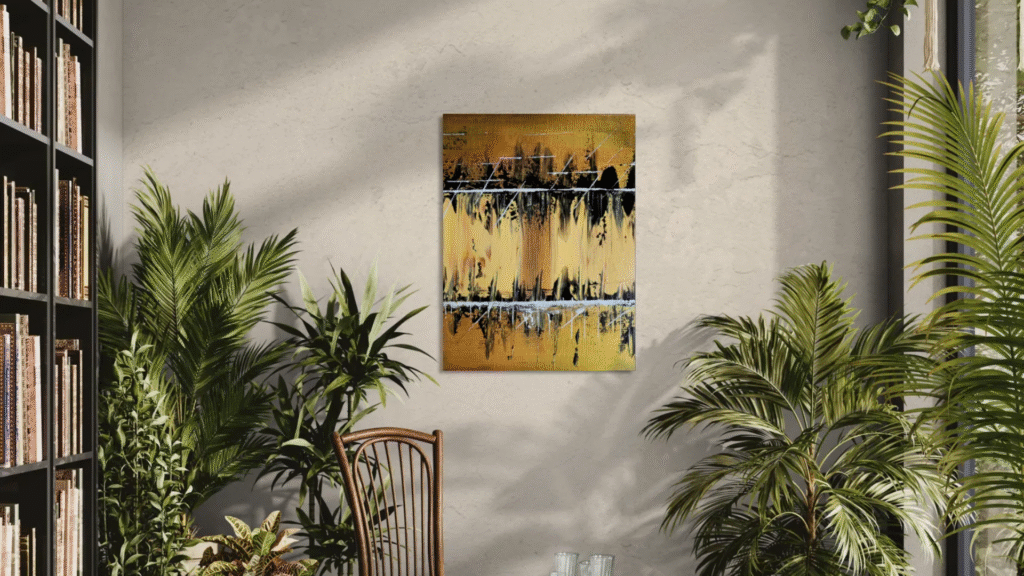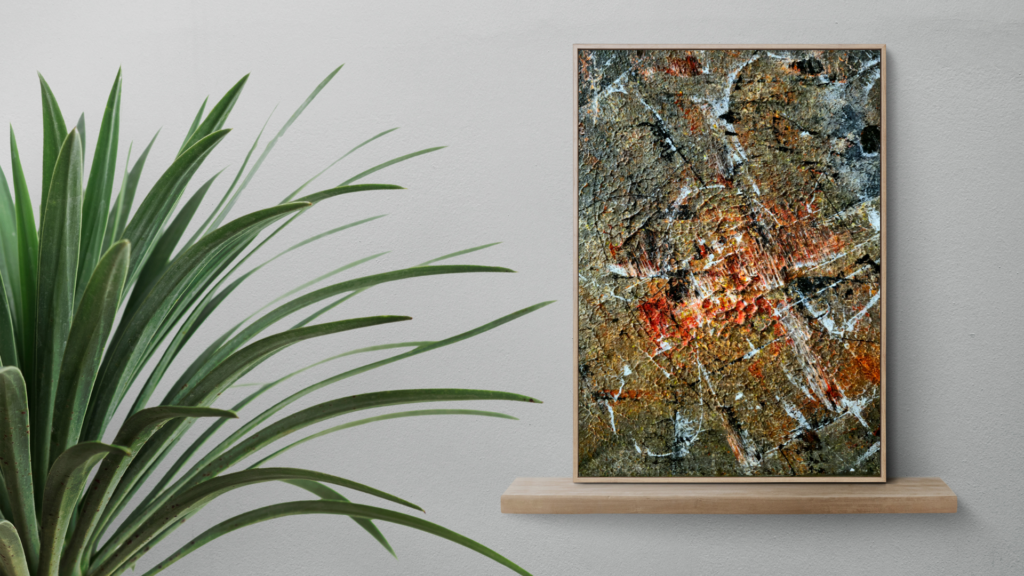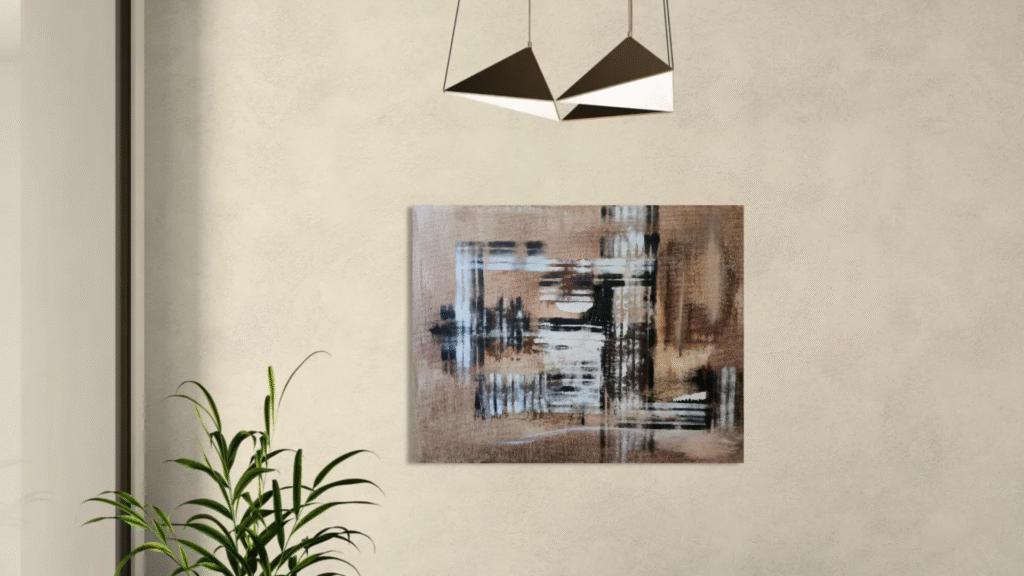
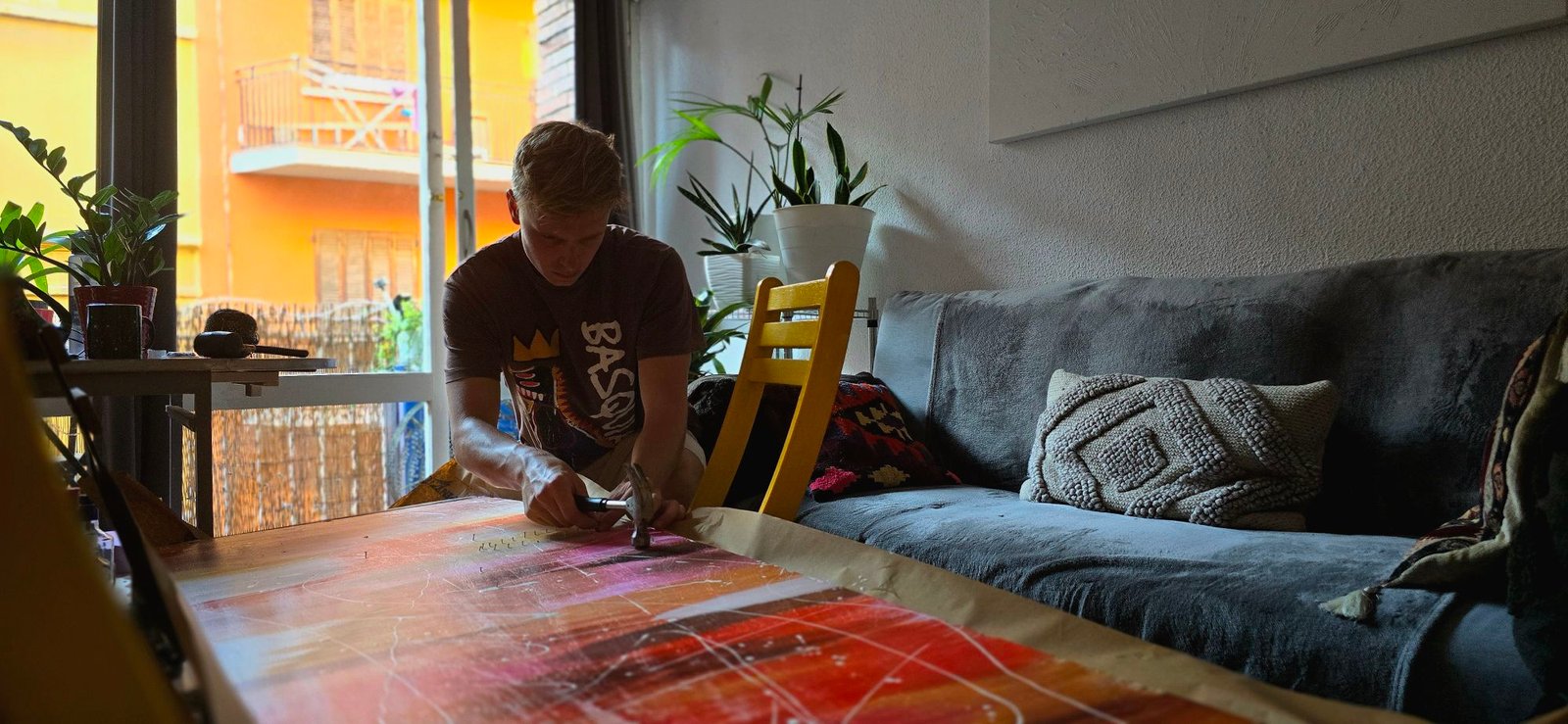
Abstract art is more than color and shape: it is energy, emotion, and texture made visible. While intuition and creativity drive your work, having the right tools and a functional studio setup ensures you can bring your ideas to life efficiently. Whether you are just starting or expanding your practice, these essentials will help you achieve expressive, layered, and dynamic abstract paintings.
1. Canvas Rolls: Go Big or Go Home
Large canvases allow you to work freely and create impactful compositions. Canvas rolls are ideal because they can be cut to any size you need, sliced in half, or framed later. For precise cuts, use a large ruler and a Stanley knife. These tools can also be repurposed to create masks or carve textures into your surfaces.
Store uncut canvas sheets flat or on a horizontal rack. Avoid folding them, as creases are nearly impossible to remove once painted over. Canvas rolls provide flexibility for experimentation and large-scale abstract works, which are essential for developing your style.
2. Palette Knives in Every Shape and Size
Palette knives are essential for abstract painting. They allow you to apply paint in bold, expressive gestures and create dramatic textures. Use knives in multiple sizes, including construction-size knives for large surfaces.
You can mix modeling paste or gesso directly on the surface using a knife to produce unpredictable and layered textures. Palette knives are particularly useful for working with thick paint or for scraping and layering colors in ways that brushes cannot achieve.
3. Modeling Paste and Gesso: For Maximum Texture
Modeling paste and gesso are the foundation for creating dimensional surfaces in abstract art. Apply thick layers to form ridges, peaks, and valleys, ensuring each layer dries completely before painting over it.
You can mix these products with acrylic paint to achieve instant color and texture. Begin with texture before adding color: this method builds depth, enhances light interaction, and provides a visual history within the painting.
4. Acrylic Paints: Fast, Flexible, and Layer-Friendly
Acrylic paints are ideal for abstract artists due to their fast-drying properties and versatility. They can be used straight from the tube for bold strokes or diluted with water for translucent layers.
Different acrylic types allow for various effects: fluid acrylics are perfect for glazes and washes, while heavy body acrylics produce thick, textured brushstrokes. Mastering both types gives you control over layering, texture, and the energy of your composition.
5. Spray Paint: Fast, Bold, and Dynamic
Spray paint is an excellent tool for covering textured surfaces or adding dynamic effects. Montana brand spray paint is recommended for quality and consistency. Caps vary and affect coverage: fat caps provide wide coverage, while skinny caps are better for detail.
Always mask areas you do not want to paint, as spray can travel far and unintentionally cover parts of your work. Practice layering on scrap surfaces to understand how the paint interacts with textures and base colors.
6. Varnish: Protect and Enhance
Varnish preserves your work and enhances color vibrancy. Spray varnish is convenient for even coverage, while brush-on varnish offers more control over gloss or matte finishes.
Gloss varnish brightens colors and emphasizes textures, while matte varnish keeps textures subtle and soft. Always test varnish on a small area first to ensure compatibility with your paint layers.
7. Brushes: Size Matters
Brushes remain essential for abstract painting. You need a variety of shapes and sizes: large brushes for sweeping gestures, medium for controlled marks, and small for intricate details.
Even with palette knives and spray paint, brushes are unmatched for achieving fine textures and expressive nuances. Collect a range of brushes to have options for every effect you want to achieve.
8. Studio Racks: Keep Canvases Safe
Proper storage is critical for maintaining your canvases in good condition. Use horizontal racks for loose sheets or vertical racks for stretched canvases. Avoid stacking them, as pressure can damage the surface and paint layers.
A well-organized studio reduces the risk of damage and makes it easier to access canvases for ongoing projects or experimentation.
9. Music: Your Emotional Amplifier
Music can enhance your creative flow and help you translate energy onto the canvas. Different genres affect mood and brushstroke movement, so experiment with playlists to find what best matches your energy and intention.
Use music to connect with your current emotional state and allow it to guide color choices, layering, and gesture. It can serve as a silent collaborator in your creative process.
10. Let Your Tools and Energy Lead
Abstract art is ultimately about freedom and expression. Tools, surfaces, and materials are extensions of your intuition. Experiment, layer, spray, scrape, and allow your emotions to guide your hands. Each session becomes a dialogue between you, your materials, and the canvas.
By combining the right tools with a mindful studio setup and a connection to your energy, your abstract paintings will grow in depth, texture, and emotional impact.