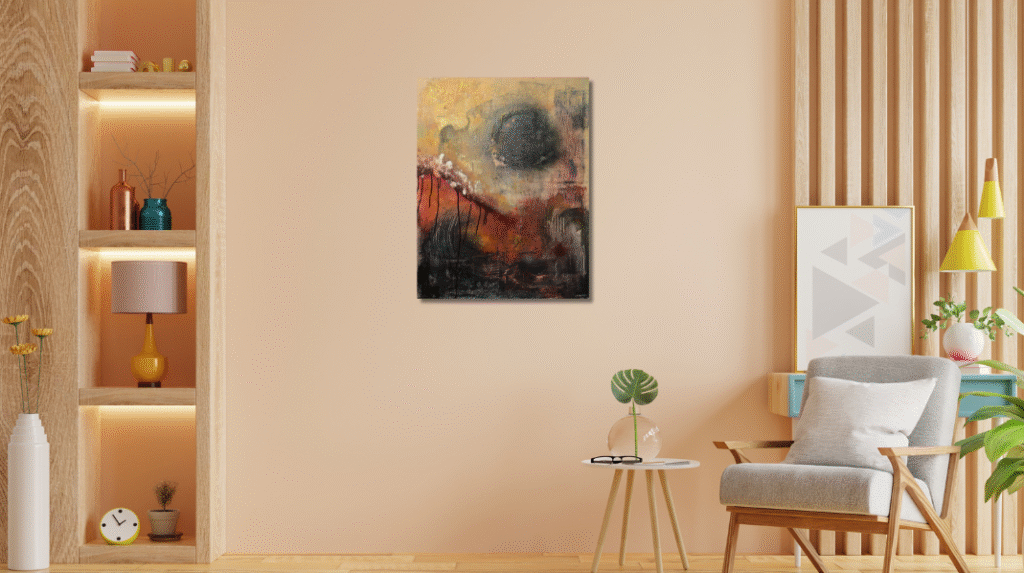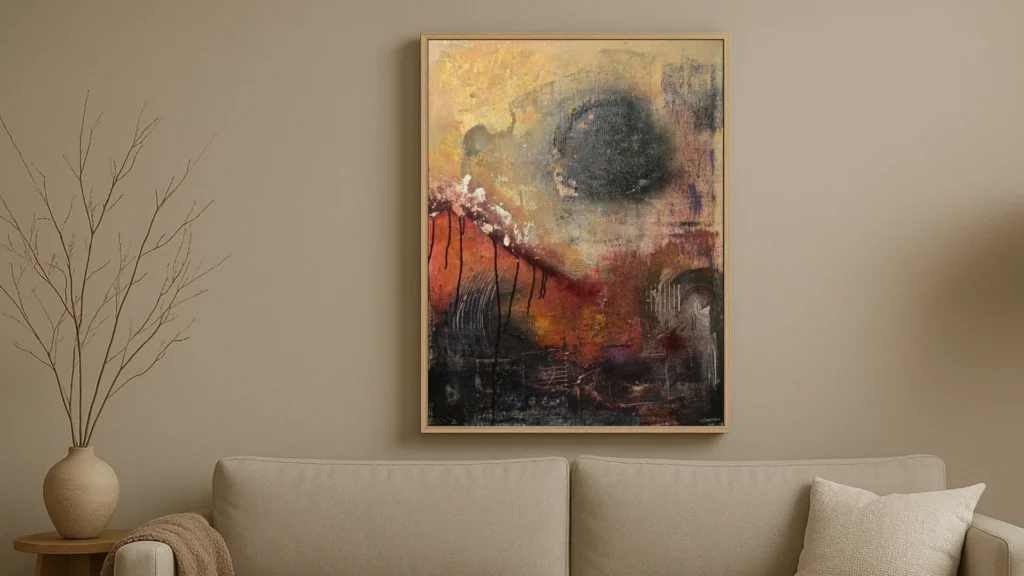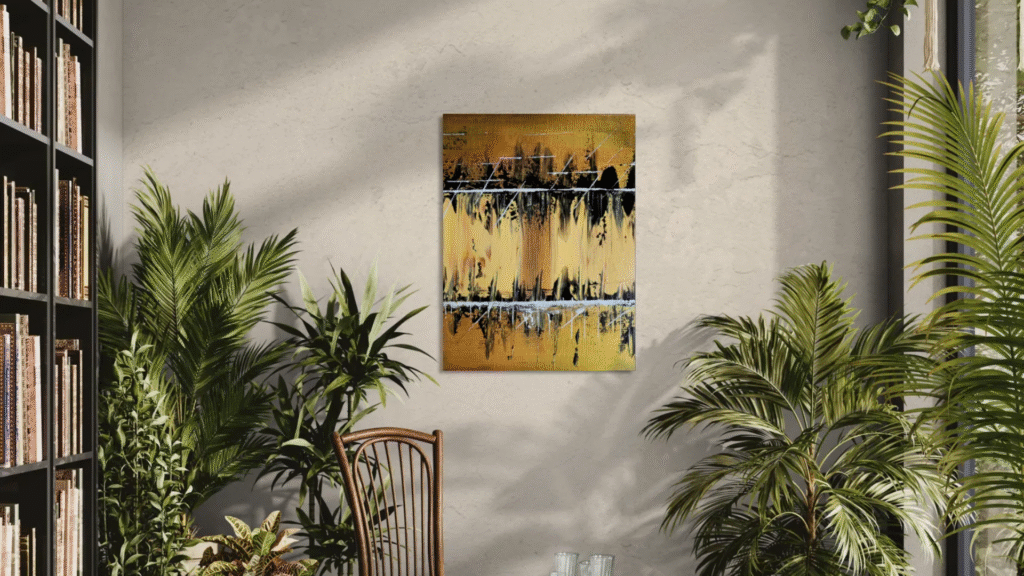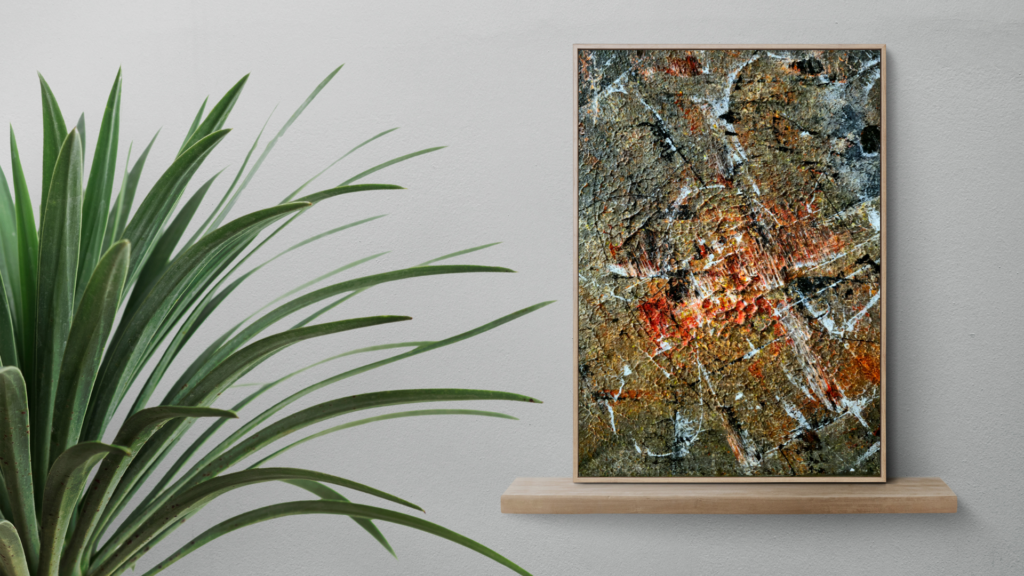
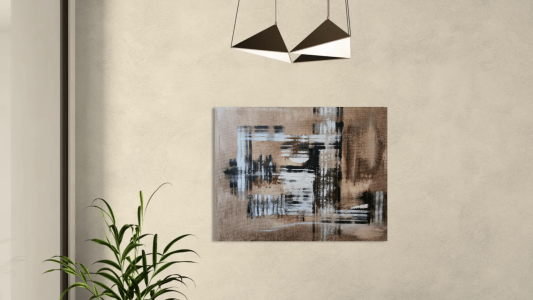
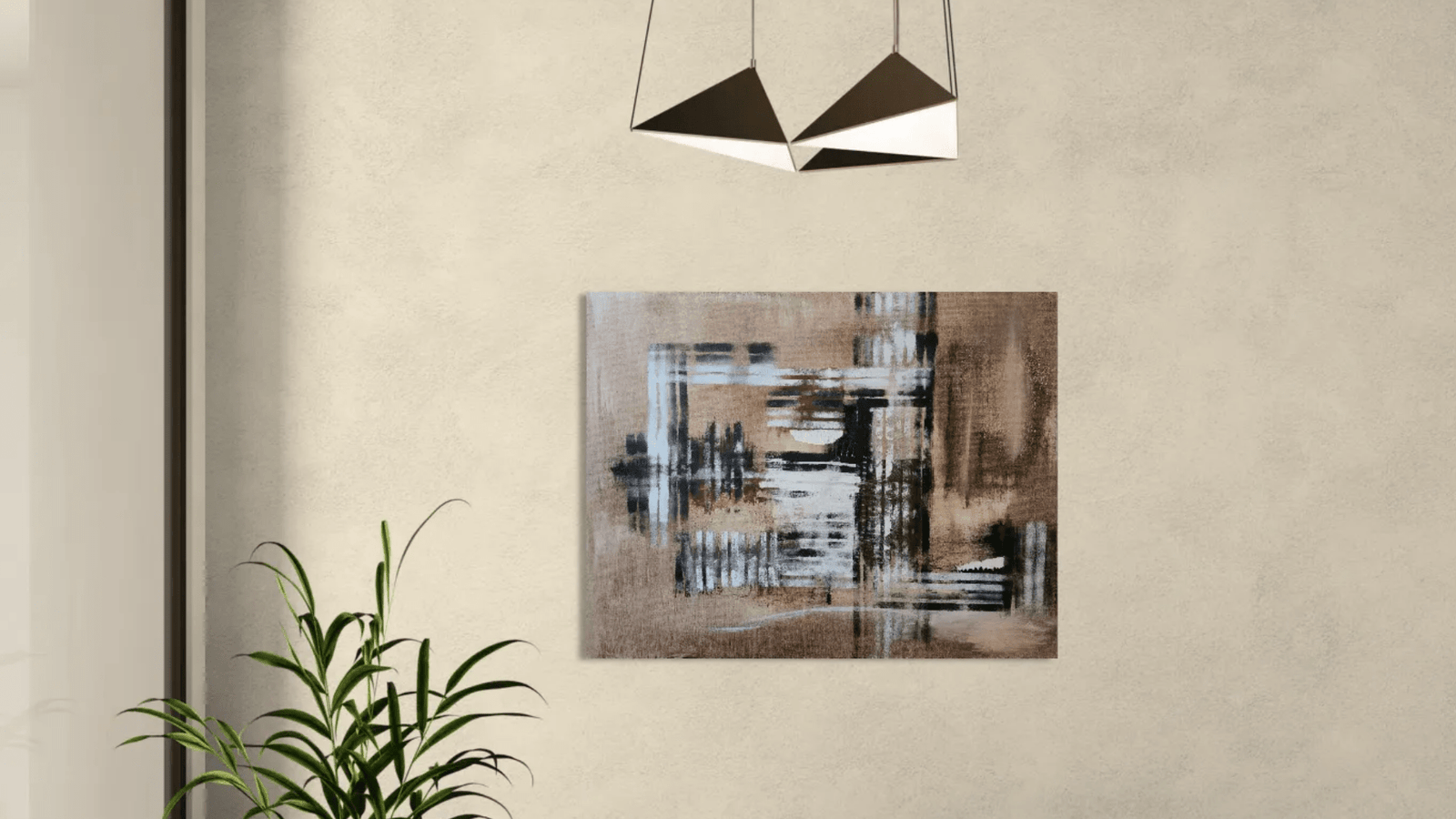
You walk into a room. There’s a painting on the wall. No faces. No figures. No storyline. And yet… it sees you.
That’s the quiet magic of abstract art. It doesn’t explain. It connects.
And Ruben’s work? It doesn’t tell you what to feel. It invites you to bring yourself into the moment, just as you are.
Abstract Art Isn’t About the Artist. It’s About You.
Ruben often starts with a personal emotion, a memory, a place, a person. But his goal isn’t to impose meaning. His intention is to leave space.
That space is where you step in.
One person might see tension. Another might see peace. The very same canvas can offer you comfort one day and confrontation the next. This is the brilliance of abstraction: it morphs with your mood, your moment, your story.
“My paintings aren’t finished when I sign them. They’re finished when someone else stands in front of them.” – Ruben
In that way, abstract art functions like poetry, not linear, but layered.
Not defined, but felt.
→ See the emotional layering in action with The Quiet Collapse or Paris
The Palette Isn’t Random, It’s Responsive
Even in his most textured or chaotic pieces, Ruben selects his colors intentionally. Not based on trends or theory, but feeling.
- Cool tones like in the painting Venice, invite quiet, introspective energy.
- Warm tones like in the Tokyo painting, ground and embrace.
- Bold contrasts like in Antwerp, energize and awaken.
This is not decoration, it’s emotional design.
Want to explore color psychology in art? Check out this guide from Eriksen Translations on How Translating Colors Across Cultures Can Help You Make a Positive Impact.
When people say things like, “I don’t know why… but I need this,” it’s usually not about the subject, it’s about how the energy of the piece resonates with their internal world.
Abstract Art as Emotional Mirror
Unlike figurative art, abstract painting doesn’t create a single narrative. It opens a dialogue between artist, painting, and viewer.
This is why museums like the Tate Modern dedicate entire wings to non-representational work. Because these pieces continue to evolve, not on the wall, but in your heart.
Whether you visit a gallery, an art fair like Affordable Art Fair, or even walk through the Moco Museum in Barcelona, you’ll notice people often spend the longest time in front of the abstract pieces. Why? Because there’s room to feel.
Ruben’s collectors often describe his work as “atmospheric,” “soulful,” or “strangely familiar.”
That’s not coincidence, that’s empathy on canvas.
Final Reflection
You don’t need to explain why you connect with a painting.
If it pulls you in, trust it.
You’re not just looking at art.
You’re being seen by it.